Stainless Steel TricyclesInventor


+86 133 9251 2305
+86 133 9251 2305
Hot search keywords: Sanitation Tricyclesmanufacturer Stainless Steel Tricycles Custom Stainless Steel TricyclesPrice
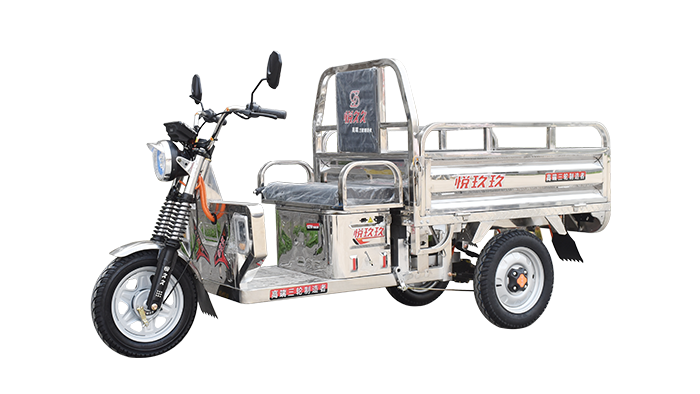
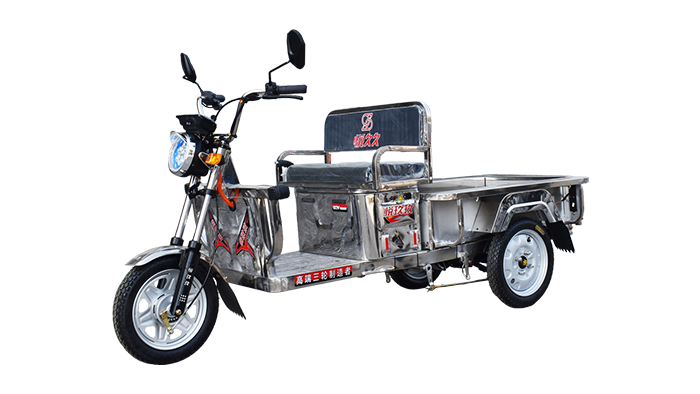
In urban-rural short-haul transportation, daily commuting, and agricultural trade, electric tricycles have become indispensable tools thanks to their flexibility and economy. However, traditional-material bodies have always struggled with the pain points of "easy rusting and easy wear"—rusty bodies in the rainy season, frame deformation after loading, loose parts after long-term use... These vehicle-use problems not only increase maintenance costs but also bury safety hazards. Today, stainless steel electric tricycles, through material innovation, provide users with a more worry-free solution.
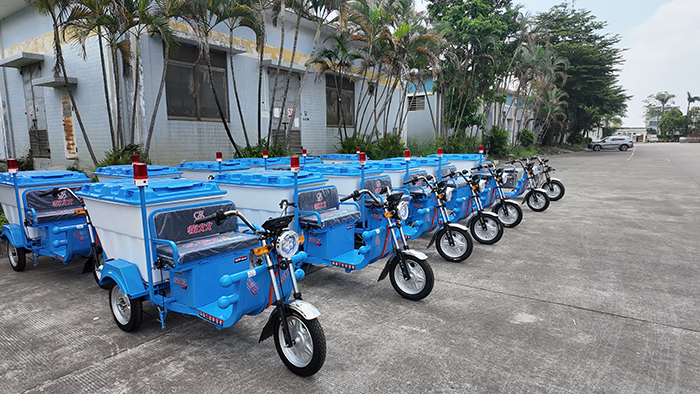
I. Rust Terminator: From "Passive Repair" to "Active Defense"
Traditional iron-sheet bodies rely on paint for rust-proofing, but daily scratches, acid-rain erosion, and humid environments accelerate paint peeling, exposing the metal to rapid oxidative rusting. Especially at weak points such as frame welds and cargo-box edges, rust spreads from the surface inward, weakening structural strength and even creating fracture risks. According to statistics, among ordinary iron-sheet tricycles used for 2–3 years, rust-induced repairs account for as high as 40% of all repairs, becoming one of users' biggest headaches.
The rust-proof property of stainless steel comes from its alloy composition—chromium forms a dense, stable oxide film on the surface that effectively isolates moisture and oxygen. Even if locally scratched, the oxide film can quickly self-repair through chemical reaction, preventing rust spread. This "inherently anti-corrosive" ability allows the stainless steel body to forgo paint protection, solving the rust problem at its root and keeping the vehicle clean and new even after long-term use.
II. Wear Killer: From "Fragile and Consumable" to "Durable"
Electric tricycles often need to carry goods or multiple passengers, placing extremely high demands on body rigidity and part durability. Traditional iron-sheet frames, to cut costs, often use thin steel-plate welding; under long-term loading or bumpy road conditions they easily develop fatigue cracks. Plastic cargo boxes become brittle from UV aging and crack at the slightest collision. In addition, ordinary metal parts such as hinges and latches, due to poor wear resistance, easily loosen and deform after frequent use, hurting the user experience.
Stainless steel's mechanical properties far surpass traditional materials—its yield strength is 1.5 times that of ordinary carbon steel, and with good ductility it can reduce weld points through one-piece forming processes, avoiding crack risks from stress concentration. At the same time, stainless steel parts have high surface hardness and stronger wear resistance; even under long-term frequent opening/closing or heavy loads, they maintain structural stability and reduce replacement frequency. This "durable" property greatly lowers the vehicle's whole-life-cycle maintenance cost.
III. All-environment Champion: From "Seasonal Trouble" to "All-weather Stable"
Electric tricycles operate in complex, diverse scenarios; high-temperature exposure, severe cold and freezing, rainy and humid environments all pose stringent challenges to material stability. Traditional materials easily expand and contract with temperature changes, causing body rattles or loose parts; in coastal regions, high-salt-spray environments accelerate metal corrosion and shorten vehicle life.
Stainless steel has a low thermal-expansion coefficient; within -40°C to 80°C its dimensional change is very small, ensuring the body stays as tight as new after long-term use and reducing failures caused by environmental factors. Meanwhile, its Pitting Resistance Equivalent Number (PREN) is far higher than ordinary carbon steel; even in humid salt-spray environments, key parts can stay rust-free for 5+ years, truly achieving "all-weather, worry-free" use.
【Article Tags】 Stainless Electric Tricycle
【ResponsibilityEdit】
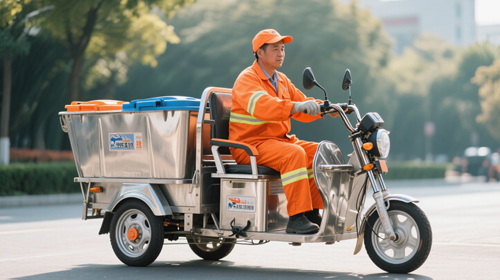
Product:1.5mAll-steelStainless SteelSanitation TricycleApplication:CitySanitationCleaningBack Streets of Yangchun County, Yangjiang, Guangdong... 【Details+】
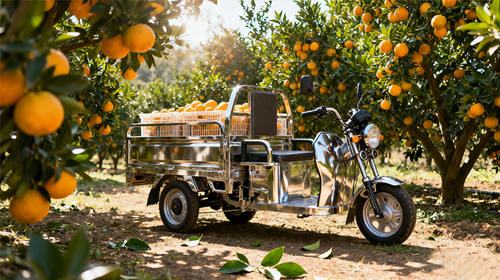
Product:1.8mLoad Capacity KingStainless Steel Electric TricyclesApplication:FruitTransportationDatangbu, Xinfeng County, Ganzhou, Jiangxi... 【Details+】
 0750-6333776+86 133 9251 2305
All Rights Reserved © 2025 Jiangmen Jiuxin New Energy Technology Co., Ltd.Record No..:粤ICP备2025465897号 Sitemap

 WeChat Official Account
 Follow Douyin
 Follow Kuaishou
 Follow WeChat Channels
 Follow Xiaohongshu