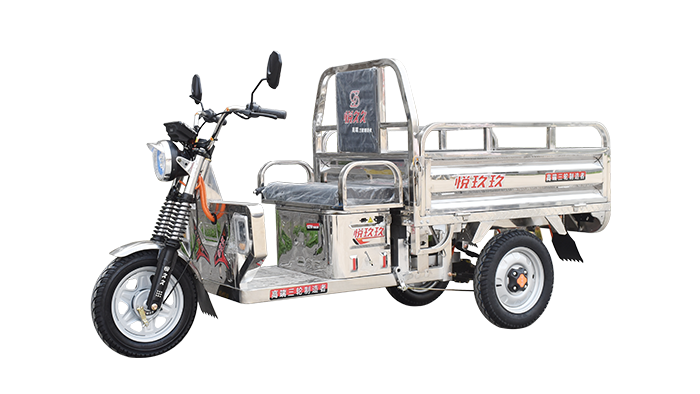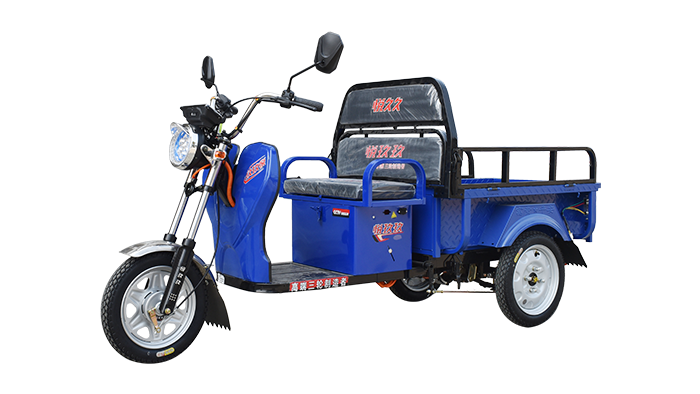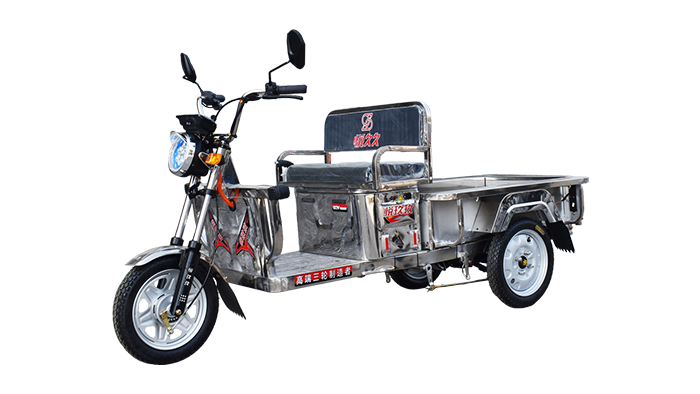
Stainless Steel TricyclesInventor


+86 133 9251 2305
+86 133 9251 2305
Hot search keywords: Sanitation Tricyclesmanufacturer Stainless Steel Tricycles Custom Stainless Steel TricyclesPrice
Thanks to their corrosion resistance and long service life, Stainless Steel Electric Tricycles have become a popular choice for load carrying and everyday personal transport. But product quality on the market varies widely, and only a scientific approach to selection will keep you from making costly mistakes. Yuejiujiu breaks down the key buying points across the dimensions that matter most, so you can find a model that truly fits your needs.
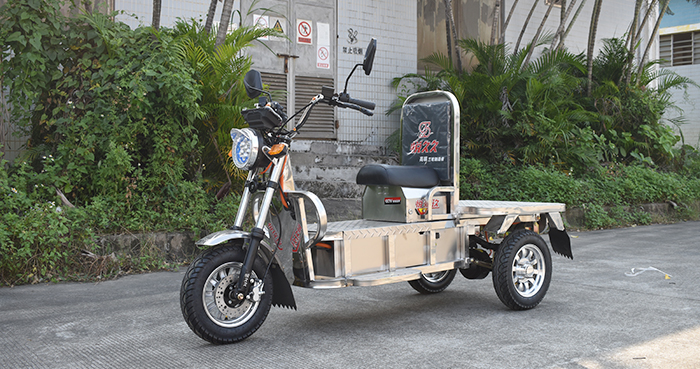
I. Identifying the Material: Look for the Core Advantages of Stainless Steel
The frame and the cargo box are where a stainless steel model delivers its core value. Stainless steel naturally resists corrosion and ageing, which makes it especially suitable for rainy or humid environments. You can judge the material in three ways: first, look at the surface—quality stainless steel shows no bubbles or pinholes after polishing and feels smooth to the touch. Second, tap it and listen—thicker tubing gives a crisper ring, while thin material sounds dull. Third, confirm the grade—201/202 stainless steel already meets everyday rust-proof requirements, and you can move to a higher specification for special working conditions. Keep in mind that although stainless steel is light, it still needs to be matched to the motor power; excessive weight only adds to the power load.
II. Core Configuration: Matching Power to Battery Range
The power system directly shapes the riding experience. Choose motor output to suit the application: around 1000W is enough for personal transport, while 1500W or more is recommended for load carrying—and give priority to brushless motors, which run quietly and smoothly. As for the battery, lead-acid offers better value for money, while lithium is lighter and performs better at low temperatures; either way, insist on genuine factory configuration for safety. For capacity, choose 60V32Ah or above for personal transport and 60V58Ah or above for load carrying. Also note that a dealer's claimed range should be discounted by roughly 30%, and keeping a 20 km reserve is the safer approach.
III. Compliance and Safety: Avoiding Hidden Risks
Compliance is the precondition for registration and road use. Always check whether the model appears in the official road motor vehicle notice, and require the dealer to supply the certificate of conformity and the certificate of consistency so that all three documents are complete. On safety, prefer a front disc and rear drum brake setup, and fit thickened run-flat tubeless tyres for better grip and puncture resistance. Wheelbase length affects stability, the body welds should be flat and solid, and the finish on small parts such as bolts is a good indicator of overall build quality.
IV. Test Ride and After-sales: Controlling the Real Experience
Never skip the test ride. Pay attention to brake sensitivity, steering smoothness and suspension performance, and check stability over rough sections in particular. On after-sales support, the battery warranty should be no less than 3 years and the motor warranty ideally 5 years or more; confirm the coverage of the joint warranty service network so that future repairs are convenient. Be wary of "low price plus free gifts" offers—such models are often old stock or refurbished units whose core components have a much shorter service life.
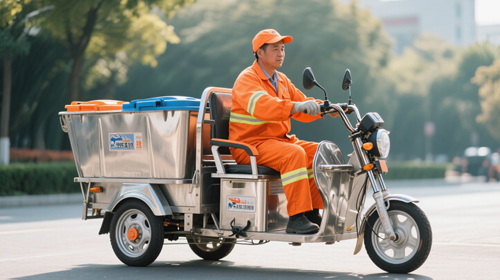
Product:1.5mAll-steelStainless SteelSanitation TricycleApplication:CitySanitationCleaningBack Streets of Yangchun County, Yangjiang, Guangdong... 【Details+】
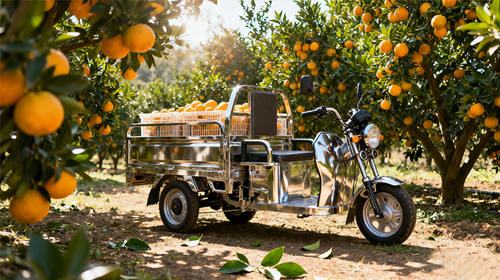
Product:1.8mLoad Capacity KingStainless Steel Electric TricyclesApplication:FruitTransportationDatangbu, Xinfeng County, Ganzhou, Jiangxi... 【Details+】
 0750-6333776+86 133 9251 2305
All Rights Reserved © 2025 Jiangmen Jiuxin New Energy Technology Co., Ltd.Record No..:粤ICP备2025465897号 Sitemap

 WeChat Official Account
 Follow Douyin
 Follow Kuaishou
 Follow WeChat Channels
 Follow Xiaohongshu